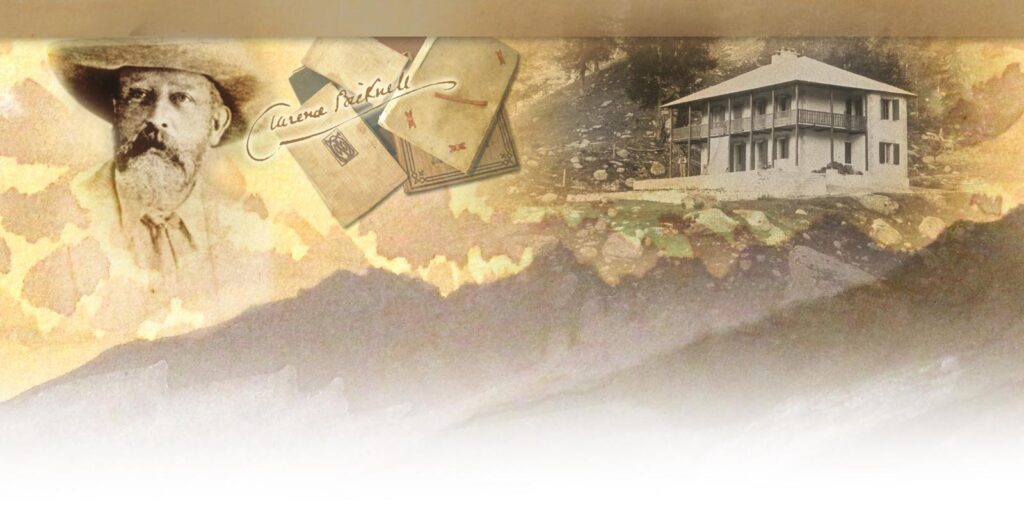
Clarence Bicknell, archaeologist. An appreciation, by Christopher Chippindale. In 1909, the senior French prehistorian Cartailhac paid Bicknell a visit. He was greatly interested by his long day’s excursion into the Val Fontanalba. The rocks were much more wonderful than he had expected; and he said. “It is a great mystery.” His antiquarian colleagues had previously […]
The Vallée des Merveilles, also known in Italian as the Valle delle Meraviglie (Valley of Marvels), is a part of the Mercantour National Park in southern France. It means “the valley of marvels” but most English-speakers use the name in French. The mountainous area, including the valleys of Meraviglie and Fontanalba, together with the towns
Clarence did not regard himself as an archaeologist. When he first went up into the Mercantour region in 1881, he certainly knew about the rock engravings but his main motive was to extend his botanical studies from the Mediterranean plants round Bordighera to include alpine specimens. He was to use the same painstaking and meticulous
Clarence Bicknell, the Collector. What is it about the human brain which makes collecting so compulsive? Many people find delight in hobby collecting; certain types of antiques, Toby jugs, Fabergé eggs, medicine jars, French pochoir fashion prints of the 1920s or garden gnomes. Children (and grown-up children) like to collect toys, especially when they make
Although Clarence is known as a painter of botanical water colours, he painted and drew sketches all his life. The Bicknell family collection and the Museo Bicknell have many examples of architecture, landscapes and images which Clarence observed on his travels. His watercolour of Florence, left, is dated 1885, the same year as the publication of
Painting & Drawing Read More »
Clarence’s painting and drawing was not limited to his water colours of plants. He sketched landscapes, architectural detail, and other subjects especially when he was walking or travelling. Much of his illustration is enhanced into patterns, such as the repetitive use of the stem of a flower and its blossom to create a frame for
In the summer of 1886, Clarence Bicknell rented a house at Castérino on the gentler slopes of Mount Bego, where he could combine his studies of alpine plants and the rock engravings. Increasingly his summers were spent in amassing his collection of drawings, rubbings, and photographs, on which he based his first papers in Italian
An appreciation, by Graham Avery Download the 2024 updated version of this article in pdf … Clarence Bicknell’s major work was the exploration and recording of the prehistoric rock engravings in the high valleys of Fontanalba and Meraviglie. But before he discovered archaeology, his passion was botany, and it was his botanical excursions that
This list of books and papers written by Clarence will be developed with time, hopefully to include significant unpublished works in museums and the family collection. The first list here includes works about Clarence Bicknell or closely-related subjects and is compiled by Marcus Bicknell. Then there are three further lists created by Dr. Giovanni Russo
Like many a younger son of a moneyed 19th-century family, Clarence Bicknell went into the Church. This was a matter of genuine and felt devotion. At Cambridge University he was much influenced by an enthusiastic group of young churchmen. Soon after he had graduated in 1865, his 23rd year, he took orders in the Church